
Rapid expansion of renewables strains planning, increases risks, and raises demands for regulatory certainty
By Pedro Augusto
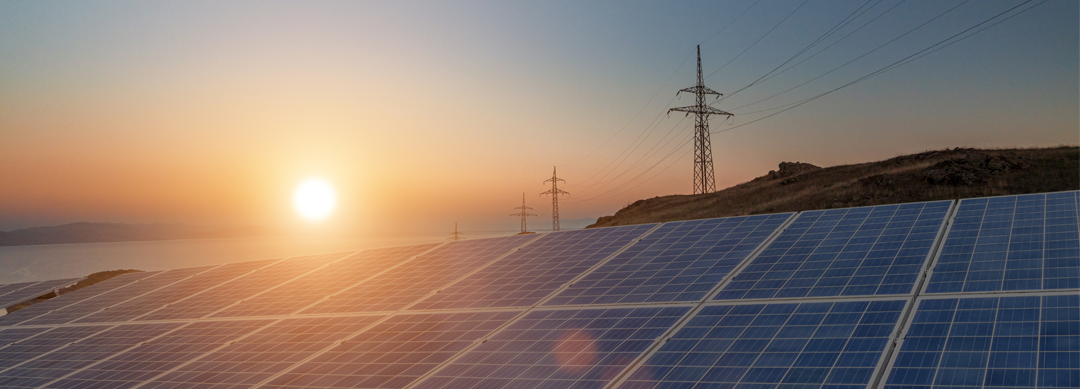
The accelerated growth of Brazil’s energy sector—driven primarily by renewable sources—has exposed structural limitations that call into question the country’s ability to sustain foreign capital inflows over the long term. Although Brazil posts strong figures—with more than US$84 billion in foreign direct investment in the sector and installed capacity exceeding 200 GW—experts point out that the mismatch between generation growth and the capacity for planning and energy transmission has created significant bottlenecks, particularly in transmission and system coordination.
According to Roberta Demange, partner at Pinheiro Neto Advogados, international investors seek not only a high volume of opportunities, but also predictability. “It is not just about attracting capital, but also about ensuring legal certainty; more than volume, what matters is the structure and framework in which that investment takes place.”
Representing the public sector, Guilherme Zanetti Rosa, director of planning and concessions for electricity transmission and distribution and international interconnections at the Ministry of Mines and Energy, stated that the country has built a solid regulatory foundation over decades that continues to support the sector’s attractiveness. “Legal and regulatory certainty is an essential pillar in any major infrastructure project,” he said.
According to him, the recent track record of transmission auctions—marked by strong competition—reinforces this interest. Even so, the current scenario presents new challenges. The shift in the expansion profile, with greater weight given to the free market and the rapid entry of renewable sources, has increased planning complexity.
“Today, we plan a system that will operate seven to ten years from now, but problems evolve much faster than that,” he noted. This mismatch, he added, is further intensified by the arrival of large energy loads, such as data centers and hydrogen-based energy projects, which place additional pressure on the need to expand Brazil’s infrastructure.

Reproduction/CCBC
From the investors’ perspective, the main concern is the direct impact of these distortions on project returns. Ricardo Motoyama, vice president of commercial and new business at Elera Renováveis, highlighted that curtailment (mandatory cuts in generation) is already significantly affecting the sector.
“One of the largest solar parks in the Southern Hemisphere (the Janaúba Solar Complex in northern Minas Gerais) experienced generation cuts of around 25%,” he said. “That means 25% of revenue lost; no business plan can sustain that over 30- or 40-year projects.”
In his view, the lack of a structured solution to the issue undermines future expansion. “Without addressing this issue from the perspective of government, tariffs, and investors, we will not be able to develop new projects,” he stated.
Despite uncertainties, Fabio Jacob, managing director and head of infrastructure and investment banking at Scotiabank, does not see a lack of capital, but rather greater scrutiny in capital allocation. “The money is there,” he said.
According to him, Brazil’s capital markets have already consolidated themselves as a relevant source of financing for infrastructure projects, including in the power sector. Still, investors and lenders have raised their requirements in light of perceived risks.
In this context, predictability becomes a determining factor. Energy infrastructure projects operate on timelines ranging from 20 to 40 years, increasing their sensitivity to regulatory changes, operational uncertainties, and system coordination failures.
Among the possible solutions discussed are the modernization of grid access rules, the use of technologies such as batteries to increase system flexibility, and adjustments to the planning model to address the sector’s new dynamics.
The rise of data centers and AI increases pressure on energy infrastructure
A new source of pressure on energy infrastructure comes from the rapid expansion of the digital economy. In the Forum panel dedicated to the role of data centers, experts highlighted that the growth of artificial intelligence is reshaping the country’s energy demand profile.
“Data centers are no longer just an IT accessory; they are now critical infrastructure,” it was noted during the discussion.
Driven by the widespread adoption of generative AI, these assets now require not only large volumes of energy, but also reliability and low latency—further intensifying pressure on the power system and its capacity for coordinated expansion.

Reproduction/CCBC
Beyond high consumption, their strategic nature is also gaining importance. The discussion pointed out that data sovereignty and national security have become part of the debate surrounding investments in this type of infrastructure.
From an operational standpoint, one of the main bottlenecks again ties directly to the broader challenges already identified in the power sector: grid access. “Today, the biggest difficulty is not generating energy; it is connecting to the system,” said Sergio Abela, chief operating officer at Ascenty.
In this context, the need for clearer regulatory frameworks and specific public policies also entered the agenda. The assessment is that Brazil still treats data centers in a hybrid way—between real estate and technology—when, in practice, they should already be classified as long-term strategic infrastructure. According to participants, this shift in perception is essential to enable investments compatible with the scale of growth in the digital economy—and to prevent the same bottlenecks already observed in the power sector from becoming an obstacle to the expansion of digital infrastructure in the country.