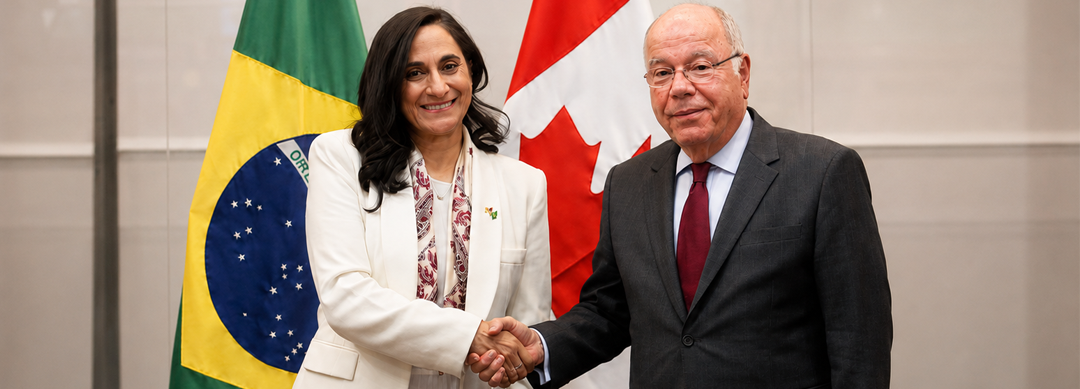

Economist Samuel Pessôa says at Forum that progress in reforms, greater economic security, and improved predictability strengthen bilateral partnerships
By Pedro Augusto
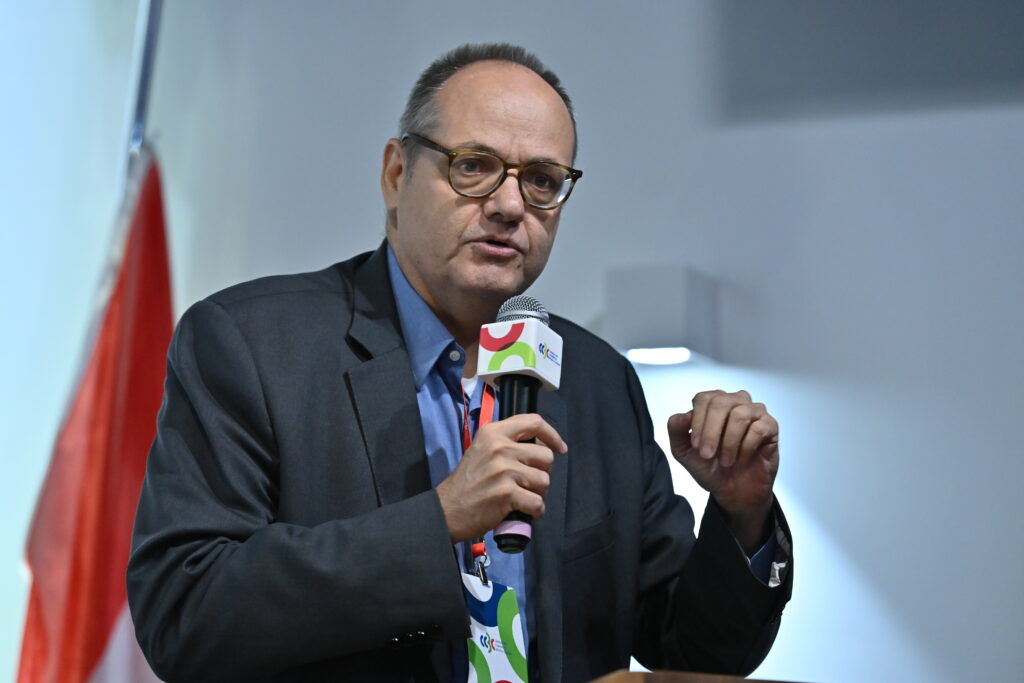
The decline in Brazil’s unemployment rate, economic growth above market projections, and more controlled inflation compared to previous periods are expected to help drive a new wave of foreign investment into the country in the short term. This assessment was made by economist at BTG Pactual, researcher, and professor at the Brazilian Institute of Economics of the Getulio Vargas Foundation (IBRE/FGV), Samuel Pessôa, during his keynote speech at the opening of the 4th edition of the Brazil-Canada Economic Forum, held this April in São Paulo.
During his participation in the event, the economist emphasized that, despite fiscal challenges, the Brazilian economy has demonstrated resilience and adaptability in recent years. From his perspective, countries such as Canada are also expected to move forward with new agreements with the Mercosur bloc (Brazil, Argentina, Uruguay, and Bolivia), as well as its associated members (Chile, Colombia, Ecuador, Peru, Guyana, and Suriname).
“Brazil is ending this period in a better economic condition than many had anticipated,” the economist stated, citing factors such as monetary policy management, progress in tax reform, and the reorganization of the fiscal framework. In his view, these measures help boost investor confidence and improve the business environment in the medium and long term.
Reproduction/CCBC
Pessôa also highlighted that the new tax structure— which unifies consumption taxes, simplifies fiscal rules, and reduces longstanding distortions in Brazil’s system—approved by the Brazilian National Congress, is likely to generate significant productivity gains over the coming decades. “We will now have a normal tax system,” he said. According to the economist, this type of institutional modernization is crucial to enhancing Brazil’s competitiveness among global investors.
In this context, Canada emerges as a strategic partner. Brazil’s former Minister of Foreign Affairs and current ambassador to Canada, Carlos França, stated during the event that bilateral relations are experiencing “perhaps the best moment of the last 30 years,” driven by a growing flow of trade and investment between the two countries.
According to the diplomat, the stock of Canadian investments in Brazil and Brazilian investments in Canada is already significant, with major companies operating in both markets. He also noted that trade between Brazil and Canada surpassed the US$10 billion mark for the first time last year, with a diversified profile and a strong presence of higher value-added products.
França added that expectations of progress in negotiations for a trade agreement between Mercosur and Canada—an agreement aimed at reducing tariffs, facilitating investment, and expanding market access between South American bloc countries and the North American partner—should increase legal and regulatory certainty, making the Brazilian market even more attractive to Canadian capital. “Canada is a leader in technology and investment, and will have improved access to the Brazilian market,” he said.
Organized by the Chamber of Commerce Brazil-Canada (CCBC), with support from Brookfield, McCain, and BRP, the Brazil-Canada Economic Forum brought together authorities, business leaders, and experts to discuss opportunities in energy, infrastructure, and strategic resources—sectors seen as central to the next phase of bilateral cooperation.