The initiative is part of the Road to COP30, which highlights local and business solutions for the climate transition, with the Chamber participating in the Resilient Cities Pavilion in Belém
By Pedro Augusto
The Chamber of Commerce Brazil–Canada (CCBC) will expand its role in the debate on sustainability and global economic transformation by supporting the Road to COP30 initiative, a project led by the Instituto Bem Ambiental (IBAM) in partnership with Grupo Myr, the Council of Architecture and Urbanism of Brazil (CAU/MG), the Federal Council of Chemistry (CFQ), and the Federal Council of Biology (CFBio).
This initiative will begin with an expedition in a motorhome trailer departing from Belo Horizonte (MG) and culminating at the Resilient Cities Pavilion, located in the Blue Zone of COP30, in Belém (PA), the official United Nations (UN) space. The Resilient Cities Pavilion will bring together government leaders, scientists, business executives, and policymakers to discuss the future of urban adaptation to climate change.
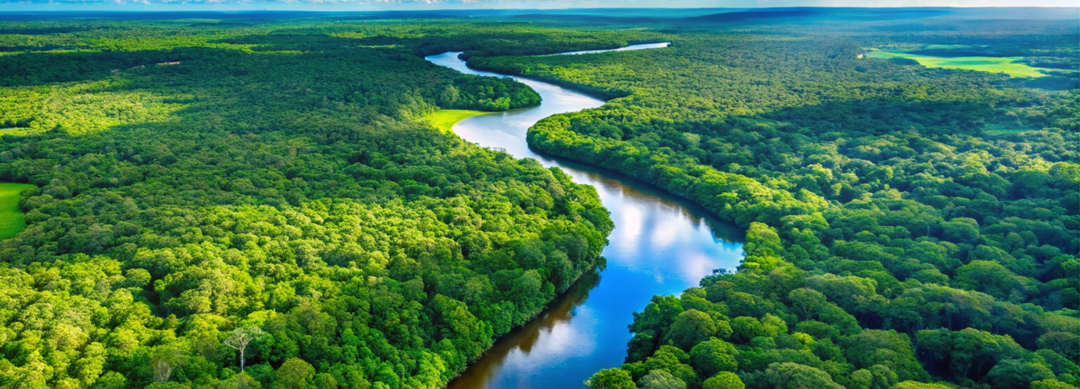
The journey will be a national expedition promoted by IBAM, covering more than 2,700 kilometers between the capitals of Minas Gerais and Pará, from November 1 to 10, passing through seven cities across four Brazilian biomes—from the Atlantic Forest to the Amazon. Along the route, the team will document local stories and solutions for climate adaptation, environmental justice, and energy transition, connecting science, territory, and people. The journey will result in a documentary, a feature report, and a photographic exhibition, emphasizing the importance of grassroots initiatives in building more resilient and sustainable cities.
“The goal of this expedition is to collect the voices of territories and communities, experiencing firsthand the challenges of the climate emergency while also highlighting the projects and transformations taking place in these areas. We want to connect the global to the local, showing how climate action truly happens on the ground,” explains Sergio Myssior, CEO of Grupo Myr and Coordinator of the CCBC’s Compliance & ESG Committee.
In addition to the expedition, the initiative includes a comprehensive program at COP30, with more than 60 meetings, panels, exhibitions, and bilateral events at the Resilient Cities Pavilion—a pioneering space dedicated to urban adaptation, nature-based solutions, and climate resilience. The pavilion will serve as a platform for international cooperation, bringing together public and private actors, multilateral organizations, universities, and representatives from local governments in Brazil and abroad.
“In this pavilion, we’ll be able to broaden the agenda on adaptation to climate change, specifically within urban spaces,” says Myssior. “Moreover, we will bring together all the stakeholders who can help transform the cities we have today into more sustainable cities and communities better adapted to a new global scenario,” he adds.
Brazil–Canada Summit
As part of this movement, the Chamber of Commerce Brazil–Canada (CCBC) will also host the Brazil–Canada Summit: COP30 and the Transformation of Global Business, which will discuss how COP30 will reshape global business and corporate strategies toward a low-carbon economy. The event will take place on November 6 at the Fundação Armando Alvares Penteado (FAAP) auditorium in São Paulo, bringing together business leaders, authorities, and experts from both countries.
Confirmed participants include Hilton Nascimento, CEO of CCBC; Izabella Teixeira, former Minister of the Environment; Guillaume Legaré, Head of the Toronto Stock Exchange (TSX); Florian Roulle, Vice President of Sustainable Finance at Finance Montréal; and Sergio Myssior, CEO of Grupo Myr.
The meeting will be one of the main forums preparing the Brazilian business sector for COP30, addressing topics such as energy transition, sustainable development, and ESG impact.
“The event is very important because it will bring together this entire network of commercial cooperation between Brazil and Canada. It allows for the exchange not only of business opportunities but also of technology and methodologies,” said Myssior.
By supporting Road to COP30 and hosting the Brazil–Canada Summit, the CCBC reaffirms its commitment to fostering bilateral cooperation and business leadership in the climate agenda. The expectation is that these initiatives will serve as a bridge between science, the productive sector, and public policy—consolidating the role of Brazilian and Canadian companies in building a more sustainable future.
“At the Summit and COP30, CCBC will take a leading role in promoting cooperation, collaboration, and strengthening the Brazil–Canada bilateral connection through initiatives that also contribute to the transition toward better cities, more sustainable businesses, and, naturally, a more prosperous society with a higher quality of life,” concludes Myssior.