
By André Menescal
The expansion of digital infrastructure has become a strategic priority in the global economy. Growing demand for cloud computing, artificial intelligence, and large-scale data processing is accelerating investments in data centers and increasing the importance of energy infrastructure capable of sustaining this growth.
This topic will be at the center of discussions at the 4th Brazil–Canada Economic Forum, to be held on April 15, featuring a panel dedicated to the challenges of energy infrastructure for data centers. The expansion of the digital economy has significantly increased energy demand and prompted governments, investors, and companies to reassess which countries and regions are best positioned to host this new generation of technological infrastructure.
In this context, countries capable of offering robust international connectivity, energy availability, and regulatory security have begun to attract the attention of global digital infrastructure investors and operators.
Brazil has been gaining increasing prominence in this debate and, within the country, certain regions have been assuming a more relevant role in this new geography of the data economy.
Brazil’s Northeast—particularly the state of Ceará—has been appearing more frequently in market analyses and digital infrastructure projects. This movement reflects a convergence of structural factors that position the state as a natural candidate to consolidate itself as a regional hub for data centers.
The global race for computing capacity
Advances in artificial intelligence and the digitalization of the economy are driving a global race for computing infrastructure.
Data centers are no longer merely technological assets; they are now considered part of the critical infrastructure of modern economies.
According to the International Energy Agency (IEA), data centers currently consume around 415 TWh of electricity per year—approximately 1.5% of global electricity consumption. Demand could more than double by 2030, reaching around 945 TWh, mainly driven by the expansion of artificial intelligence and cloud computing.
This growth places energy infrastructure at the center of investment decisions. Beyond computing capacity, the key issue is ensuring reliable, scalable, and sustainable energy supply.
Training advanced artificial intelligence models can require megawatts of power over weeks or months, demanding energy planning and power grids capable of supporting highly concentrated loads.
Why Brazil has been attracting investment
In recent years, Brazil has gained ground in global discussions on data center expansion.
Three main factors help explain this interest.
The first is the size of Brazil’s digital market. The country has one of the largest connected populations in the world and a rapidly expanding digital ecosystem.
The second is Brazil’s energy matrix. The country has one of the cleanest electricity mixes among major economies. According to the Ministry of Mines and Energy, around 85% of Brazil’s electricity is generated from renewable sources, mainly hydropower, wind, and solar.
The third is the availability of land for expanding new digital infrastructure hubs outside traditional large urban centers.
This combination has led investors to pay closer attention to regions with strong international connectivity and energy potential.
It is in this context that Brazil’s Northeast has gained prominence.
Ceará: strategic connectivity in the Atlantic
Among Northeastern states, Ceará stands out due to several characteristics that explain its growing presence in discussions about new digital infrastructure projects.
One of the most relevant factors is its strategic position on the global connectivity map.
Fortaleza has become one of Latin America’s main submarine cable hubs. The city hosts around 16 international submarine cables, directly connecting Brazil to North America, Europe, and Africa.
These include Monet, EllaLink, Seabras-1, SACS, and South Atlantic Inter Link, used by major telecom operators and technology companies.
This infrastructure significantly reduces data transmission latency and makes the region particularly attractive for digital operations that depend on high-capacity international connectivity. The concentration of cables means that a significant portion of international data traffic entering Brazil passes through Fortaleza, consolidating the city as a strategic node in the country’s digital infrastructure.
Additionally, IX.br Fortaleza, an internet exchange point operated by NIC.br, records peaks exceeding 6 Tbps, reinforcing the city’s status as one of the leading connectivity hubs in Latin America.
Investments and digital infrastructure in Ceará
The strengthening of Fortaleza as an international connectivity hub has been accompanied by the gradual development of local telecommunications and data center infrastructure.
Among notable projects is the Angola Cables data center in Fortaleza, part of the company’s international connectivity network.
Major global technology companies also rely on the cable infrastructure landing in Ceará. Projects involving Google, Meta, Microsoft, and other international firms participate in submarine cable consortia connected to Fortaleza, reinforcing the city’s role in the global data network.
This environment creates favorable conditions for the installation of new data centers near cable landing stations.
Energy and competitiveness
The expansion of data centers depends, above all, on energy.
Large-scale data processing facilities require reliable and high-capacity electricity supply, making energy infrastructure a central factor for investors.
In this regard, Brazil’s Northeast offers important advantages.
According to ANEEL, the region accounts for more than 85% of Brazil’s installed wind power capacity.
Ceará contributes to this landscape with a strong presence of wind and solar farms, as well as transmission infrastructure connected to the National Interconnected System.
This combination of abundant renewable energy and international connectivity creates a particularly attractive environment for digital infrastructure operators.
Projects under development
In addition to existing infrastructure, new projects have begun to take shape in the state.
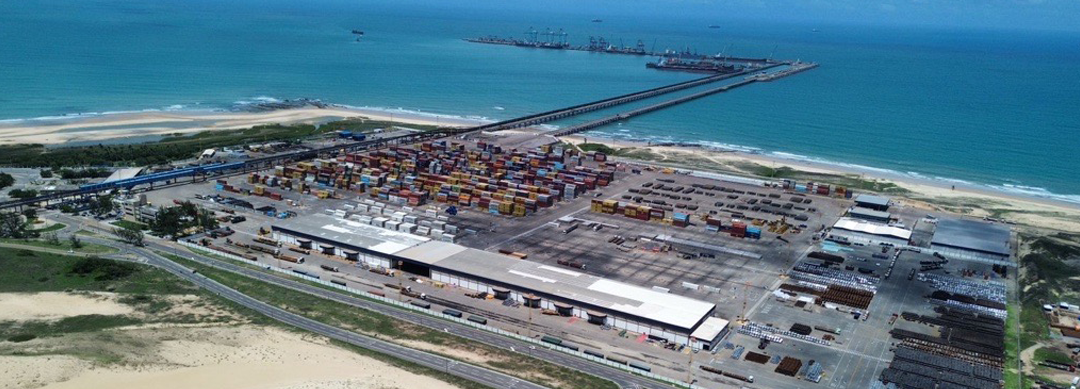
One example is the plan to develop a data center complex in the Pecém Export Processing Zone (ZPE Ceará), associated with the Pecém Industrial and Port Complex.
The project has been presented by the state government as part of its strategy to position Ceará as a digital infrastructure hub and could mobilize billions in investments in its next development phases, depending on the participation of international operators.
In this context, discussions involving ByteDance, the company behind TikTok, have also emerged regarding the potential installation of data center infrastructure in the state. Although still in the structuring phase, the project has been cited as an example of growing interest from major technology companies in developing digital infrastructure linked to renewable energy availability and international connectivity in the region.
Outlook
The growth of the digital economy creates a historic opportunity for regions capable of combining connectivity, energy, and a favorable institutional environment.
Ceará brings together key attributes that position it prominently in this discussion: strategic Atlantic location, presence of international submarine cables, expansion of renewable energy, and initiatives aimed at attracting investments in technological infrastructure.
At the same time, developing a robust data center ecosystem requires long-term planning, regulatory coordination, and significant investment in both energy and digital infrastructure.
Discussion at the Brazil–Canada Economic Forum
The expansion of data centers and the challenges associated with the energy infrastructure required to sustain them will be central topics at the 4th Brazil–Canada Economic Forum, to be held on April 15.
**This text does not necessarily reflect the opinion of CCBC and is the sole responsibility of the author who signs this content