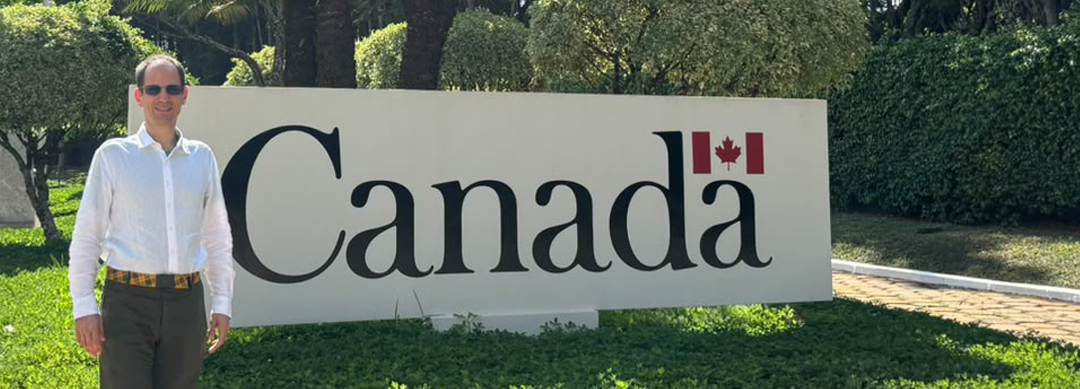
Ambassador Eric Walsh takes up Canada’s top post in Brasília with a clear goal: turning the enormous potential of our existing bilateral relations into concrete opportunities
By Pedro Augusto
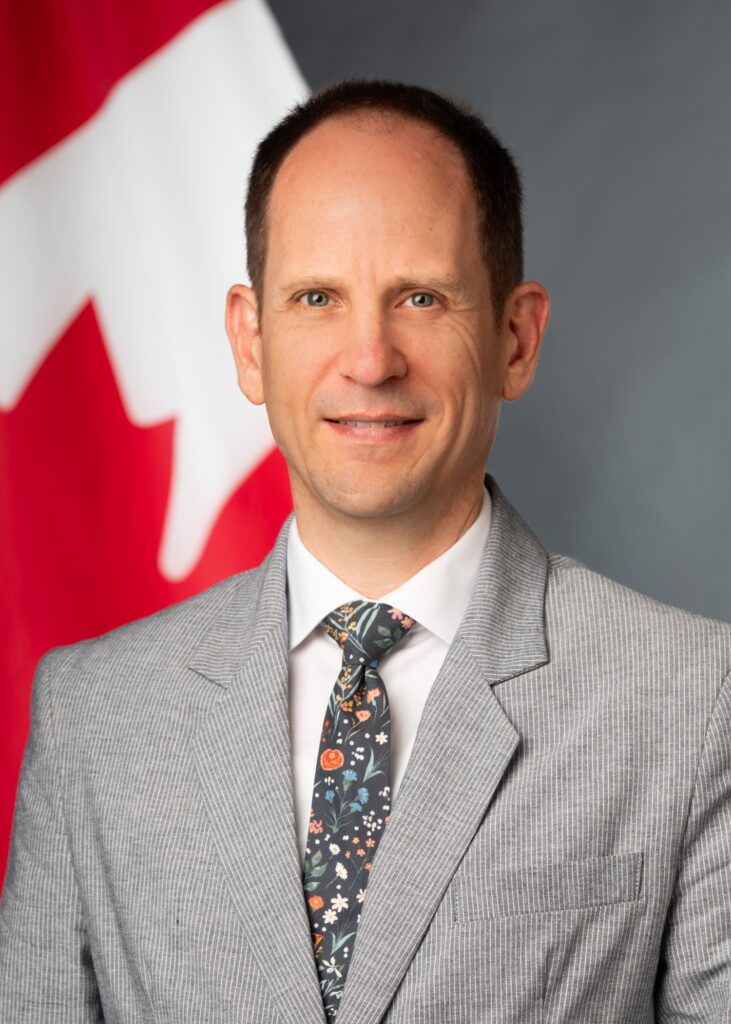
Newly arrived in Brazil, where he landed in August to head the Embassy of Canada and its network of consulates, career diplomat Eric Walsh begins his mission at a time of closer ties between the two countries and new opportunities in the bilateral relationship, a moment that coincides with the 53rd anniversary of the Chamber of Commerce Brazil-Canada. In an exclusive interview with News CCBC, he points to trade, investment, critical minerals, clean energy, innovation, science and education as the areas with the greatest potential to expand this cooperation. He also discusses progress in the negotiations on the Canada-Mercosur Free Trade Agreement, which, he says, the Canadian government would like to see concluded by the end of 2026. Read on:
News CCBC – How do you assess the current state of Canada-Brazil relations?
Eric Walsh – I think Canada-Brazil relations are in a very good place right now. We have a strong, mature partnership built not only on shared democratic values, but also on deep people-to-people ties and an increasingly dynamic economic relationship. We work closely together across a remarkable range of sectors, including clean energy, critical minerals, innovation, science, and agriculture. The relationship goes well beyond business as we also collaborate on shared priorities, including Indigenous affairs and climate action.
Canada is committed to deepening its relationship with Brazil, and the level of engagement we’ve seen over the past year is a clear reflection of that. We’ve had visits from Canada’s Minister of International Trade, who advanced negotiations on the Canada-Mercosur Free Trade Agreement, and from our Minister of Foreign Affairs, who was here for the bi-annual Strategic Partnership Dialogue. That helped set an ambitious bilateral agenda for the year ahead, including new agreements and cooperation in areas such as customs, media freedom, health and wildfire management.
The strength of the relationship shouldn’t be measured only by what happens between governments. The connections between people matter just as much, and education is one of the best examples of how those ties have grown. For more than 15 years, thousands of Brazilians have studied in Canada through exchange programs, including initiatives that give public high school students the opportunity to study in Canadian schools. They return home with friendships, experiences and connections to Canada that can last a lifetime.
And that exchange goes both ways. Canadian university students regularly come to Brazil to study and experience the country firsthand. Our universities are also building strong ties through joint research in fields ranging from medicine and veterinary science to water management and environmental action.
So when we talk about the Canada-Brazil relationship, we’re talking about much more than agreements between governments or trade between companies. It’s a relationship that has been built over time between our institutions and, importantly, between our people. After 85 years of bilateral relations, we have a very solid foundation to build on, and we’re not done yet!
News CCBC – What are the future prospects for the relationship, and what will be your priorities in Brazil?
Walsh – This relationship has enormous potential, and my priority is clear: turn that potential into concrete opportunities for both countries. The Canada-Mercosur free trade negotiations are an important part of that. A successful agreement could open doors for Canadian and Brazilian companies, make it easier to do business in both directions, and create new opportunities for investment.
But trade is only part of the picture. Canada and Brazil are both major economies with abundant natural resources, strong agricultural sectors and a real stake in the energy transition. There is a lot we can do together on clean energy, critical minerals, climate action and sustainable growth. Another important priority will be to deepen collaboration on innovation, research, technology, and educational partnerships and exchange.
Beyond trade, there is also a significant opportunity to deepen investment ties between our two countries. Canada is undertaking major investments in energy, infrastructure, defence and AI, while advancing regulatory reforms designed to attract new capital and accelerate major projects. That creates opportunities for Brazilian companies and investors as Canada diversifies its economic partnerships — just as we want to see more Canadian companies investing and growing here in Brazil.
Ultimately, I want to help construct a relationship that is increasingly two-way: more trade, more investment, more innovation and more collaboration between our countries.
News CCBC – Which sectors have the greatest potential for strengthening bilateral ties?
Walsh – If I had to highlight one sector, mining and critical minerals would probably be at the top of the list. Canada and Brazil are both global mining leaders, and both have many of the minerals the world needs for the clean energy and digital transitions. That gives us a lot to work with — from sharing expertise and building more resilient and sustainable supply chains to cooperating with Brazil as it implements its new National Plan for Critical and Strategic Minerals.
And the opportunities go well beyond mining. Clean technologies and renewable energy — including hydrogen, carbon reduction technologies and sustainable infrastructure — are all areas where our countries have a lot to offer each other. Agriculture is another important area, and one where we’re already seeing results, especially as Canada’s number one export to Brazil, potash, continues to fuel Brazil’s agricultural production.
I also wouldn’t want to leave out research partnerships. They connect our universities and researchers, drive innovation and build relationships that can last for decades. Those kinds of connections are an important part of keeping the broader Canada-Brazil relationship moving forward.
News CCBC – Do you expect a Mercosur-Canada agreement soon, and what benefits would it bring?
Walsh – Our Minister of International Trade, Maninder Sidhu, has said he would like to see an agreement concluded before the end of 2026, so Canada’s commitment is clear. That said, trade negotiations are complex, and it’s always difficult to predict exactly how long they will take.
What’s important here is the difference an agreement could make for the economic relationship. It would create new opportunities for trade while strengthening the commercial ties that are already there. By improving market access, reducing barriers and providing greater predictability, we can create the conditions for Canadian and Mercosur companies to invest, grow and build longer-term partnerships in each other’s markets.
And there’s a broader reason why an agreement matters now. At a time when countries are looking to diversify their trade relationships and build more resilient supply chains, bringing Canada and Mercosur closer together makes good strategic and economic sense. We’ll keep working hard to reach a deal that creates opportunities and supports growth, jobs and innovation across all our countries.
News CCBC – What lessons from your diplomatic career are most relevant in today’s geopolitical environment?
Walsh – One of the most important things I’ve learned over the course of my career is that communication matters most when things are difficult. In periods of uncertainty or rapid change, you need relationships that are built on trust, consistency and a willingness to listen.
That’s particularly important in the world we’re navigating today. Whether we’re talking about climate change, economic security or global instability, these are challenges no country can tackle effectively on its own. We need partners, dialogue and practical ways of working together.
I’ll do my part to keep communication links strong between our two countries and find practical ways for Canada and Brazil to work together to meet today’s challenges and deliver results that benefit both countries. We need reliable partners and at the end of the day, the strongest partnerships are built not only on shared interests, but on mutual respect. Those are principles that have guided me throughout my career and continue to shape how I approach my work today.
News CCBC – Have you visited Brazil before, or is this your first time here? What were your first impressions of Brazil and the Brazilian people?
Walsh – Believe it or not, this is my first time in Brazil. So far, I’ve visited Brasília, Belo Horizonte, Rio de Janeiro and São Paulo, and each city has impressed me in a different way. I’m quickly discovering just how diverse Brazil is. Every place seems to have its own personality and culture. And I know I’ve barely scratched the surface so far.
One thing that has stood out most has been the people. I’ve been struck by the warmth and generosity of Brazilians, and by the tremendous sense of pride people have in their country. Brazilians also seem very patient and tolerant, at least when I’m trying to speak Portuguese! So that’s been a really nice part of my first few weeks here. Now I’m encouraging all my friends and family to come and visit, to see this country for themselves, as well as to give me an excuse to go exploring with them. So hopefully I’ll have more to add in the months ahead.