4th edition of CCBC’s Diversity, Equity and Inclusion Forum brought together experts from major companies and organizations to discuss corporate governance, resilience, and the role of managers in the workplace
By Pedro Augusto
In a global context marked by resistance and setbacks in diversity, equity, and inclusion (DEI) policies, the Chamber of Commerce Brazil–Canada (CCBC) held the 4th edition of its DEI Forum on September 11. The event gathered private sector representatives, specialists, and authorities to debate the future of corporate practices in the face of backlash—negative reactions against policies in areas such as gender equality, race, and social norms.
The event was opened by CCBC President Hilton Nascimento, who highlighted the Chamber’s role in promoting a fairer and more innovative work environment.
“There is no inclusive, prosperous, and innovative future without strengthening these agendas,” said Nascimento. “Diversity and inclusion are not just possible paths, but imperatives for the development of organizations and society.”
Next, CCBC Advisory Council Chair and Coordinator of the Diversity, Equity and Inclusion Commission, Esther Nunes, stressed the importance of keeping the agenda active even in an adverse context.
“I could never have imagined that we would be here today talking about stagnation and setbacks; this is a global trend that manifests itself in open resistance or in the dismantling of already implemented policies,” noted Esther. “That is why we must keep this debate alive.”
The keynote speech was delivered by Lara Gurgel, Executive Director of the Institute of Government Relations (IRELGOV), who emphasized the need for leadership and civil society engagement to curb setbacks.
“Our role is to act as a brake so that all the achievements in diversity, equity, and inclusion that have already been made do not roll back—or roll back as little as possible; the true legacy of leadership is to make advances in this area irreversible,” stated Lara.
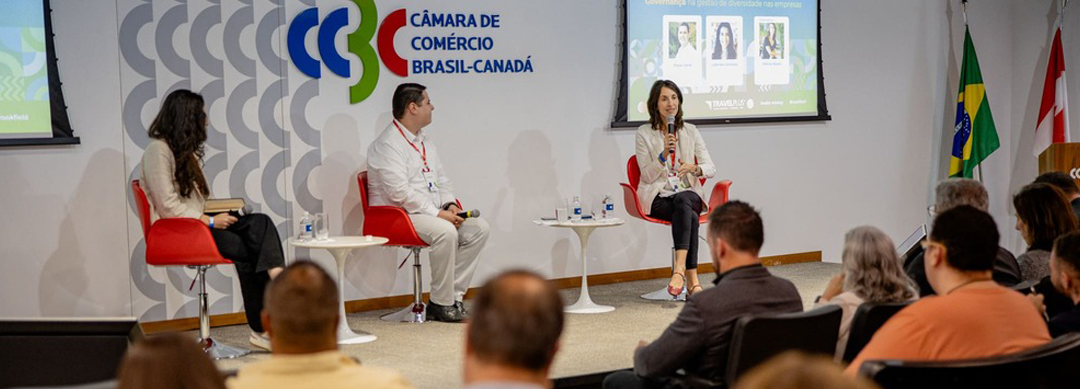
Among the panels, the first addressed governance in managing diversity within companies, moderated by Milena Buosi, DEI Manager at Suzano. Panelists included Gabriela Almeida, Executive Manager of Human Rights and Labor at the UN Global Compact, and Paulo Ferle, Diversity and Inclusion and Corporate Social Responsibility Coordinator at TozziniFreire.
According to Ferle, many organizations still replicate similar governance models without questioning their effectiveness. For him, in order for diversity and inclusion to be robust and deeply rooted in a company, corporate governance must extend across different areas of the organization. “Only then will organizational culture have solidity, preventing the topic from being restricted to a single pillar,” he said.
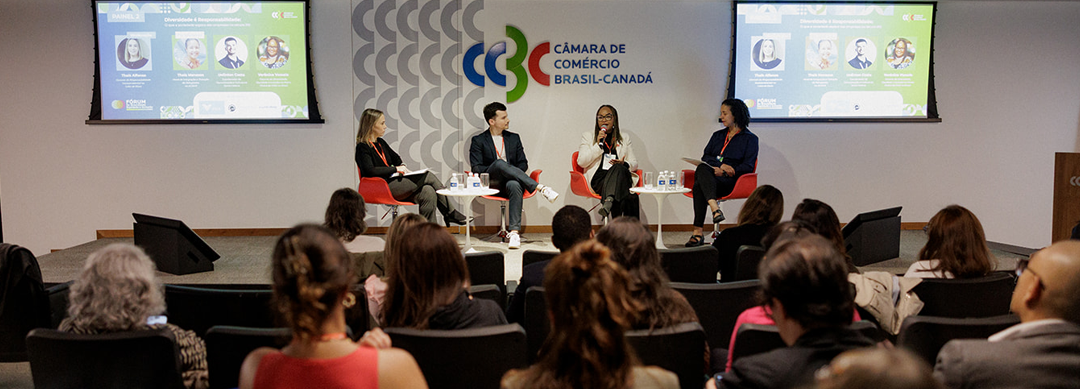
The second panel brought reflections on resilience in times of crisis, moderated by Carla Bellangero, Audit & Assurance Partner for ESG and leader of the Inclusion, Diversity and Equity Committee (CIDE) at KPMG Brazil. The discussion featured João Yosef Torres, co-founder of Mais Diversidade, and Débora Gepp, Diversity and Inclusion Manager at Thomson Reuters and co-founder of the Brazilian Network of LBTQ+ Women. Panelists highlighted how lessons from big techs can inspire managers in Brazil and Canada to sustain inclusive practices even under external pressure.
According to Débora Gepp, DEI strategies must follow technical methodologies, which reinforces the consolidation of this agenda as part of a company’s organizational culture. “It is essential that diversity and equity policies do not boil down only to affinity groups or events,” she emphasized. “They must be based on a structured process, focused on cultural change and on educating people.”
In closing, participants stressed that consolidating diversity and inclusion, beyond organizational initiatives, largely depends on leadership’s ability to turn these agendas into irreversible commitments for companies and societies.
The forum, supported by Travel Plus, Brookfield, and Lundin Mining, was attended by representatives of the Canadian government, such as Anouk Bergeron-Laliberté, Consul and Head of the Commercial Section of Canada in São Paulo, and co-chair of CCBC’s Diversity, Equity and Inclusion Commission. The presence of such representatives aimed to reinforce international cooperation between the two countries in promoting increasingly inclusive work environments.